Tuesday, October 18, 2022

The Adventures of Ichabod and Mr. Toad -- WATCH THIS MOVIE (again)

Revisit Sleepy Hollow by way of Great Britain


Tonight's Spooky Tuesday pic is "The Adventures of Ichabod and Mr. Toad" (RKO/Disney, 1949). This is a compilation of two short features from the tail-end of a time when Walt Disney and his studio focused more on short standalone stories and musical animation rather than full feature-length narratives. This is usually attributed to manpower and resources being depleted by World War II.

The Wind in the Willows

What's it about?
Mr. Toad: heroic villain or villainous hero? Or just an idiot?

The first of these is an adaptation of the main plot of British author Kenneth Grahame's novel "The Wind in the Willows." In this short we are introduced through the narration of Basil Rathbone to a river community of anthropomorphic animals. This consists of Rat (Claud Allister), a steadfast British gentleman, Mole (Colin Campbell), Rat's kind but slow-witted compatriot, Angus MacBadger (Campbell Grant), the cranky Scottish manager of Toad Hall (the county seat of the locality), and Toad Hall's owner and heir Mr. Toad (Eric Blore), whose flights of fancy and rambunctious temperament have driven the once-regal hall to the brink of financial ruin, much to the chagrin of Mr. MacBadger.
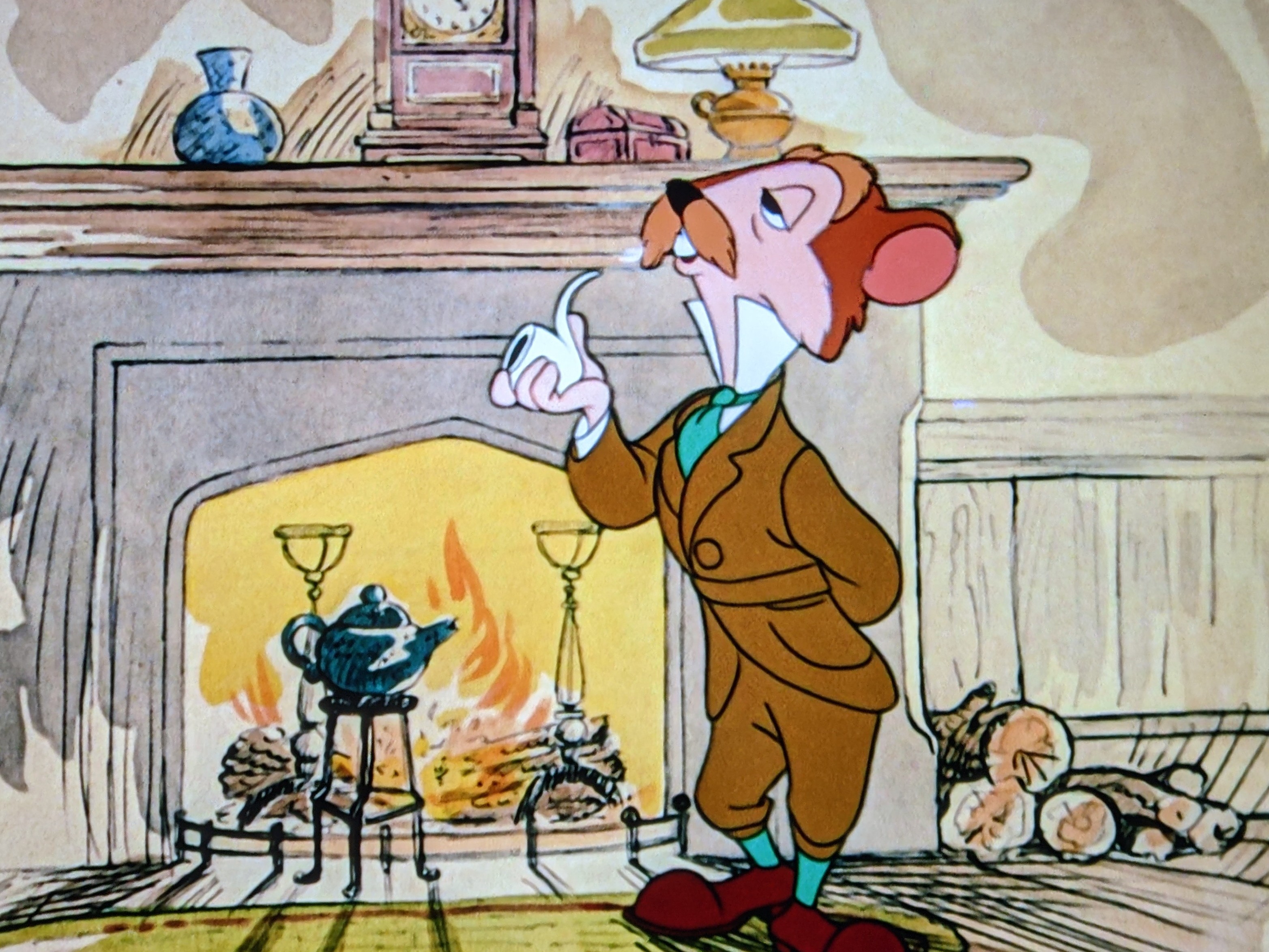
A distinguished Water Rat.

A complacent Mole.

An angry MacBadger.

Since Mr. Toad had acquired a yellow "Gypsy caravan," he and his equine friend Cyril Proudbottom (J. Pat O'Malley) have been literally tearing up the countryside, causing their neighbors to flood the hall with requests for recompense.
The Destructive Duo.

Things take a turn for the worse when Mr. Toad sees an automobile for the first time, sparking a new mania.
The stolen vehicle.

Mr. Toad's friends are forced to sequester him in his room at Toad Hall until it has passed, but he escapes and is soon after jailed for car theft. At his trial, Mr. Toad (foolishly representing himself) explains that he traded the deed to Toad Hall for the automobile he was caught with, but his own witness turns on him and accuses Toad of trying to sell him a stolen car.
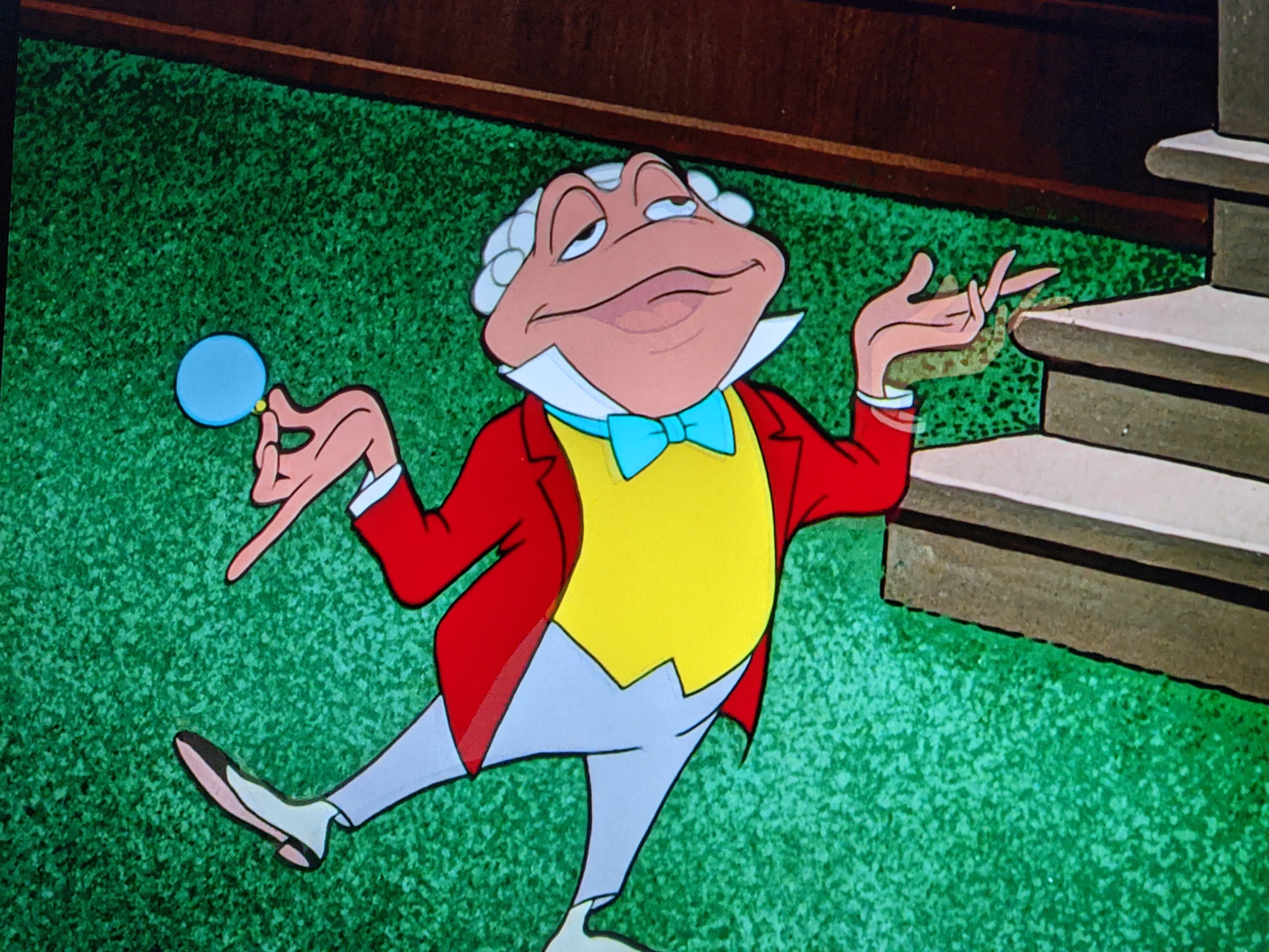
Nope. Just an idiot.

Sentenced to a prison sentence of twenty years, a repentant Mr. Toad soon escapes and attempts to clear his name of the false crime.
Mr. Winky, the real culprit?

Origins and legacy

This segment was originally meant to be a feature length production, but was cut due to a lot of the animation crew being drafted to the war. Some sharp-eyed viewers will also note that the gang of weasels that occupy Toad Hall near the end were later used as the direct inspiration for the "Toon Squad" in the 1980s movie, "Who Framed Roger Rabbit."

I mean, it's kind of obvious.

Although perfectly delightful, this story obviously isn't very spooky. Still, it has quite a lot of action and comedic chops. It definitely had autumnal vibes, even though the denouement takes place during Christmastime. No, this segment definitely doesn't belong on a "Spooky Tuesday" segment. However…

Ichabod Crane or The Legend of Sleepy Hollow

What's it about?


The second adaptation is a Bing Crosby narration of "The Legend of Sleepy Hollow" by American author Washington Irving. For those not familiar with the story, a few years after the American Revolutionary War, the quiet Dutch colonial settlement of Sleepy Hollow, New York, up the Hudson River from New York city and Terrytown is suddenly atwitter with the arrival of the new schoolmaster, the freakishly lanky Ichabod Crane.
Sounds suspiciously like Bing Crosby...

The studious and superstitious Mr. Crane quickly endears himself with the community thanks to his level-headed attitude and charm with the local ladies, but this is less from a sense of altruism and more from his unappeasable appetite and social ambition. His ungainly appearance and unflappable attitude quickly makes him the target of the mischievous "Brom Bones," a handsome and athletic local youth.
Remember when Disney wasn't afraid to put smoking and alcohol in their "kids" movies?

This antagonistic relationship is elevated to bitter rivalry when both men set their eyes on Katrina Van Tassel, the beautiful daughter of the richest man in Sleepy Hollow.
Von Tassel, sexpot.

Brom, for all his strength and looks is quickly outmatched by Ichabod's odd grace, intelligent charm, and greed for the elder Van Tassel's fortune. Nearly defeated at Sleepy Hollow's Halloween ball, Brom uses Ichabod's most prominent weakness against him: His superstition. Brom regales the gathered crowd with the story of Sleepy Hollow's most terrifying apparition, the Headless Horseman, a mounted ghost who rides over the countryside looking for a replacement for his lost head.
Kiss him, already!

The story quickly affects Ichabod who leaves the party to make his way back to the schoolhouse, past the church and graveyard the Horseman is alleged to rise from. Traveling along the quiet road, the terrified Crane imagines all sorts of ghosts and ghouls behind every tree and on the wind. Just as he begins to regain his composure, he is met with the otherworldly form of the Headless Horseman, and the chase begins!
Seriously, this is terrifying for all ages.

Great for a scare

Okay, so I just had to talk about this segment, which gave me no end of nightmares as a child. Even today, the minutes from when Ichabod Crane leaves the party to his arrival at the graveyard are some of the spookiest, most tense moments ever put to film. The imagery is so haunting and severe that it triggers some primal part of your brain.

My favorite shot of the whole film.

Anyone who has ever looked out the window of their parents' car on a wooded country road on a moonlit autumn night knows the exact sensation that this gives; shiver on your spine, the hairs standing up on the back of your neck, the dread when you see those mysterious lights in the forest (are they another car? A house? Or perhaps the candle of a supernatural Jack O'lantern?).
The thing you see before you die.

What's more, those anxious moments are followed up by the reveal of one of the scariest villains ever animated. It does not disappoint.
This is seriously scarier than any slasher film ever made.

Origins and legacy

Now, while perfectly serviceable and a fairly faithful adaptation of the short story that it's based on, there are a few notable differences: The book strongly implies at the end that the "Headless Horseman" was Abraham "Brom Bones" Von Brunt disguised to run off Ichabod Crane. This "child-friendly" adaptation however, is left more ambiguous, implying that Ichabod might have actually been taken by a very real Horseman. Interestingly, the character model of Brom Bones in the animation was later used as the inspiration for the character of "Gaston" in Disney's later "Beauty and the Beast" animation, so… Knowing THAT villain, one could even suppose that if the animated Brom was disguised as the Horseman, he could have "done in" Crane himself. It's little thoughts like this that keep the movie fresh in my mind, and something that I come back to every year to feel those shivers.
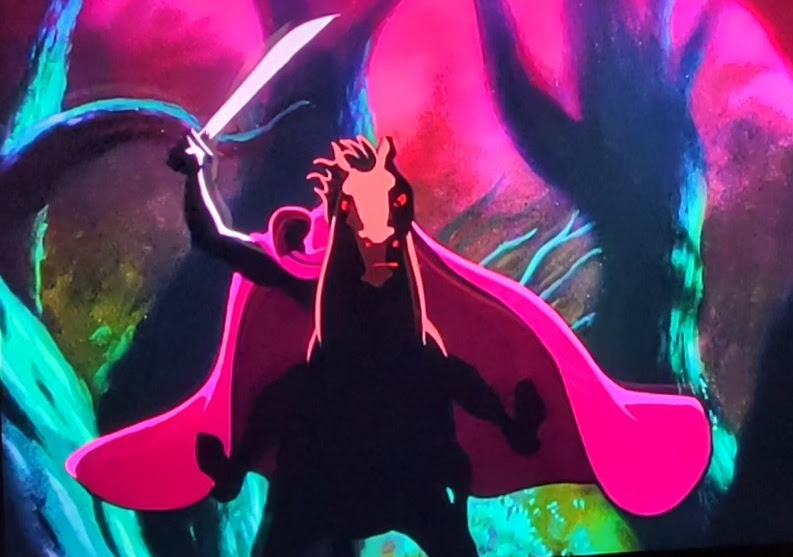
It's perfect in every way.

My recommendation:

If you've never seen it, I cannot recommend this movie enough. Even if you can't stand most of the rest of the production, the last ten or so minutes are well worth the runtime (which is a paltry one hour and eight minutes). It is genuinely scary, and may actually give your kids nightmares for years to come (so it's very rewarding).

Where can I find it?

The Adventures of Ichabod and Mr. Toad is available to stream on Disney+. Watch it with the lights off for maximum fright!

Tuesday, October 11, 2022

Carnival of Souls: Spooky. Clean. Fun.

Carnival of Souls -- take a look


Tonight's Spooky Movie Tuesday pic is "Carnival of Souls" (Harcourt Productions, 1962). The film starts with reckless youths initiating a high speed drag race on Kansas country backroads.
Darn kids and their road racin'!

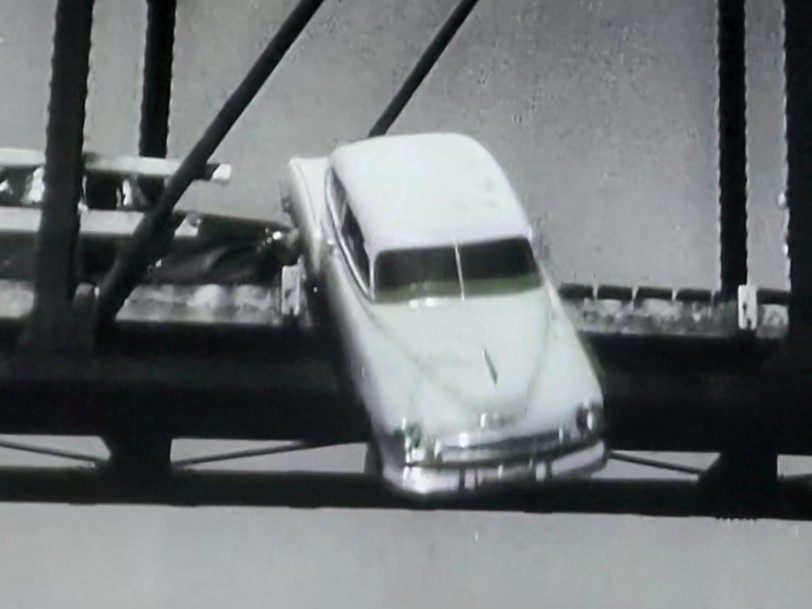
Things take a tragic turn when one of the cars is crowded off an old bridge and plunges into the river below. Rescue workers desperately rally to save the occupants of the automobile, but the murky river makes finding the car nearly impossible.
Always remember to tip your driver.

Miraculously, Mary Henry (Candace Hilligoss) washes up alive on a sandbar where she's saved by the community, but her friends aren't so lucky.
An unlucky survivor.

A week later Mary decides to leave her hometown and put the tragedy behind her, taking a job as a church organist in Utah. On her long car ride to her new home, she passes an old amusement park on the shore of the Great Salt Lake that catches her attention.
To be fair, this place is kind of creepy anyway.

Soon after she begins to see a ghoulish face out of the corner of her eye, following her everywhere. As she settles into her boarding house and new job she gets the sense that the sinister character is stalking her, but her landlady, Mrs. Thomas (Frances Feist), fellow housemate and full-time scumbag John Linden (Sidney Berger), and new associate Dr. Samuels (Stan Levitt) never see the menace that's terrifying her. As the days wear on, she begins to see more otherworldly horrors following her. Is it survivor's guilt, an undiagnosed psychosis, or something more?
Who is the sinister figure watching Mary? Probably "Meta" (he does kind of look like Mark Zuckerberg).

This guy is so slimy, you might mistake him for "The Blob"

Dr. Samuels seems to want to help Mary, but can he?

Less than perfect

Let's get the detritus out of the way right now. This is a quintessential low-budget "B" movie from the 60s. The film doesn't have a lot of technical gravitas in its favor: The film grade is sub-par, still grainy black-and-white in an age when color film was becoming common. The audio quality is even worse, in that the actors have to shout in most scenes in order for their lines to be heard above the always present hum of the recording equipment. This is even more apparent in scenes that are entirely scripted in post with ADR, as the sync is off and the disconnect is obvious. Believe it or not, I feel that these "faults" actually help the film.

Perfect for less

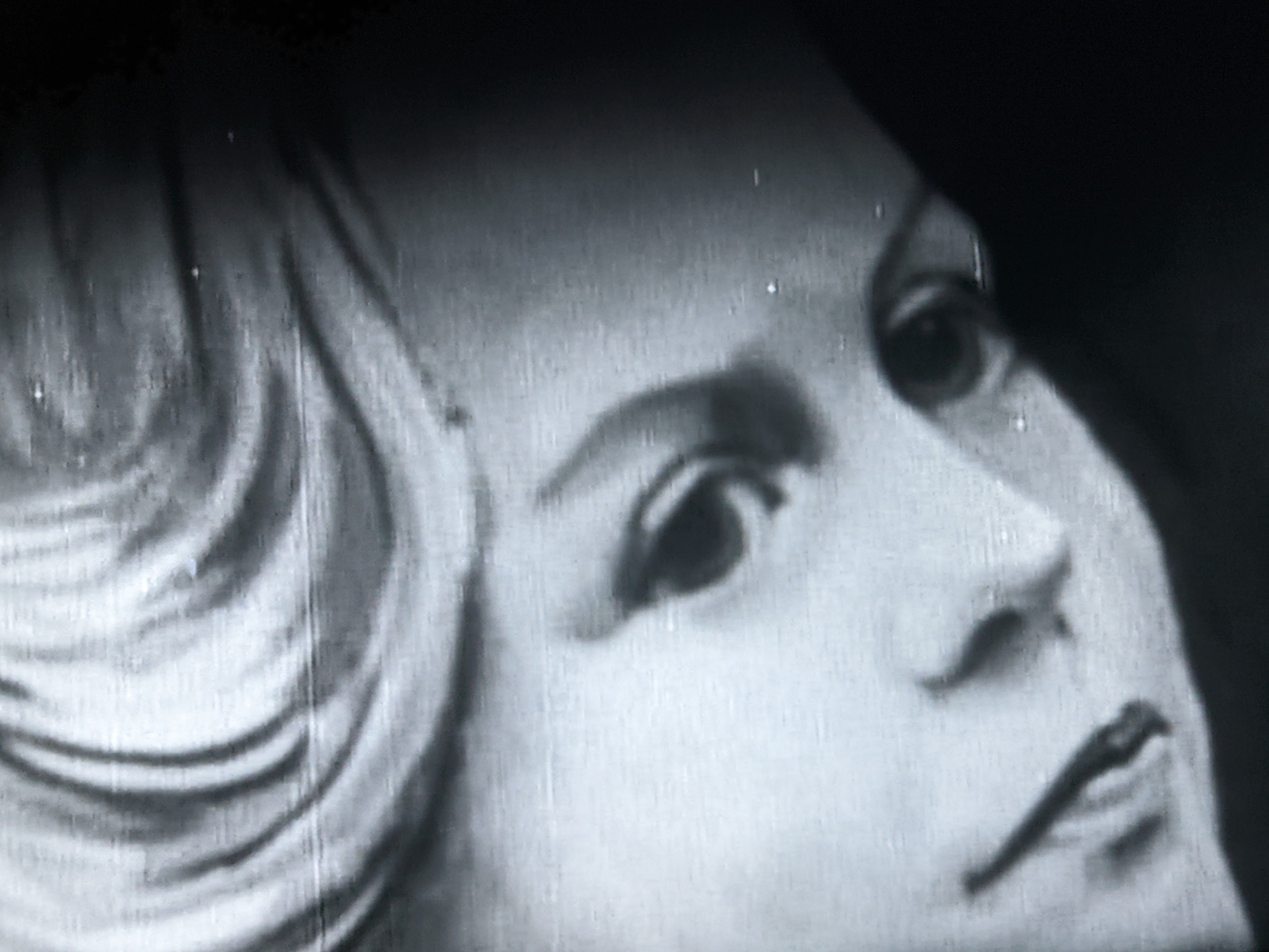
The technical limitations and thin budget (supposedly this entire film was shot for around $30,000 -- about $294,000 in today's dollars) forced the crew to be creative in other ways. The actors aren't exactly giving it their all (but they're quite good for amateurs). Candace Hilligoss's performance is a standout (although that's expected seeing that she is the only full-time professional actress in the cast), switching between aloof, regretful, and disconnected with little more than her overly expressive eyes.

"She's Got Candace Hilligoss Eyes" never made the top 10 on Billboard.

Even though the equipment that the film was shot on was sub-par, the cinematography is INCREDIBLE. The camera always seems to choose creative shots that highlight Mary's isolation, pulling beautiful separation between light and shadow.
You'll spend much of the movie waiting for something to happen, and that's a good thing.

An almost exclusively pipe organ soundtrack builds along with Mary's fear, but is completely silent at other times and makes scenes even edgier with its absence.
More than just a soundtrack: Pipe organs factor into the story.

This is helped even more by the locations. The movie's centerpiece is the Saltair amusement park during an off-season, taking a location typically full of people and making it eerily empty.
The park is extra creepy. Scoot!

The "ghouls," while incredibly cheap monsters to create (simple black costumes, white and black fright makeup, and really nothing else) are nonetheless among the creepiest creeps ever put to celluloid.
Simple, yet effective.

The simple story still manages to end on a twist that modern audiences may see coming, but is still effective imagery that will stick with them even today. The film somehow still manages to be terrifying without even a drop of blood put to screen.
But when it happens, it happens fast.

If you can't tell, I love this film; it's easily one of my top five horror films, and has stuck with me for years. I still get chills watching it.

Although there's no strong language, no blood, and no real on-screen death, I wouldn't recommend watching this with young children; the movie isn't really action-packed for the most part, and the ghouls are still likely to give them nightmares.

Seriously, you all knew someone like this in high school, I guarantee it.

I cannot stress enough how unsettling they can be.

Where can I find it?

While I watched it on DVD, "Carnival of Souls" is a public domain film and is available at many different sources -- for free! You can watch a restored version at archive.org, here.

Tuesday, October 4, 2022

Dementia 13: The 13th Kind of Dementia

Kicking off Spooky Movie Tuesday with an old favorite: Dementia 13

The opening placard actually gives away part of the mystery.

Now that it's October, I'm going to shift the page to a "Spooky Movie" format for a bit, to give me a chance to reunite with some of my favorite "scary" old films (yes, I put that in quotes, for reasons that will become apparent throughout the month).

What's the deal with Dementia 13?

We're kicking things off with "Dementia 13" (Roger Corman Productions, 1963). The film starts out with a couple taking a late night boat ride. The wife, Louise Haloran (played by Luana Anders) and her husband, John (Peter Read) are having an argument. Louise covets the family fortune, but John's mother is determined to leave her fortune to charity. Repulsed by his wife's greed, John continues to row until he succumbs to a heart attack. Failing to save her husband, the desperate Louise ties him to the anchor and pushes him over the side, then rows back to the Irish Castle Haloran to fabricate a scenario in which John has left early on business while she can manipulate the family out of some sort of inheritance. 

Louise Haloran (Luana Anders), the greedy, inhumane "main character."

Meanwhile, the youngest of the surviving Haloran children, Billy (Bart Patton) is at the airport to pick up his brother Richard's (William Campbell) fiancé Kane (Mary Mitchel).
Billy Haloran (Bart Patton), haunted by the memory of his drowned sister Kathleen.

Richard's fiancé, Kane (Mary Mitchel), is disturbed by the family's obsession with death.

Richard Haloran (William Campbell) is a tormented sculptor and artist, but could he be a murderer?

Lady Haloran (Eithne Dunne), the mourning matriarch of Castle Haloran.

Kathleen's ghost haunts every inch of the film.

With the remaining family reunited, their mother (Eithne Dunne) insists on having a funeral ceremony in memory of her youngest, Kathleen, passed seven years ago that day. Her children placate her, and the ceremony results in her fainting when one of the flowers dies while touching the grave.
The Haloran family gathers for Kathleen's annual funeral.

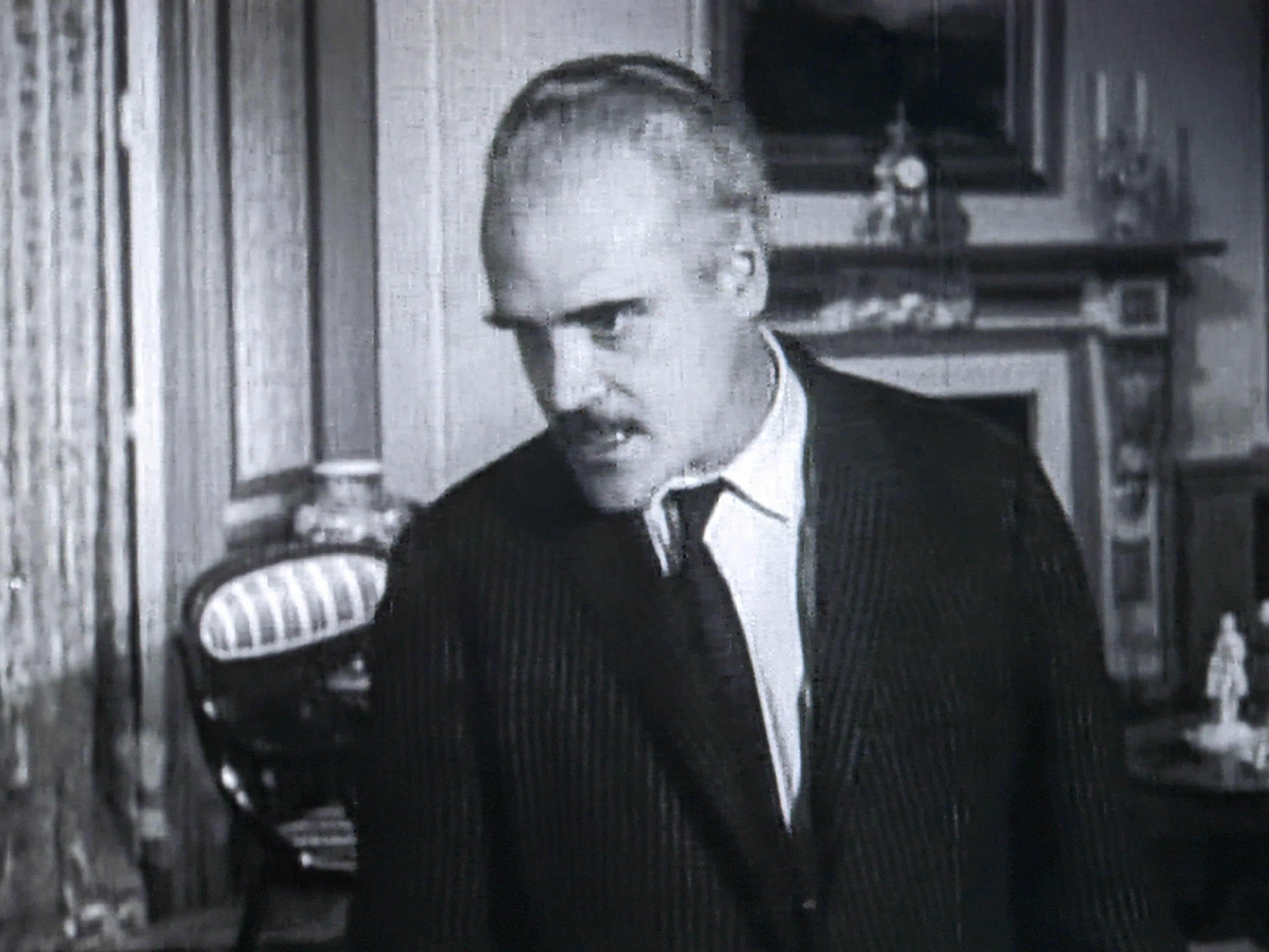
Looked over by the family doctor Justin Caleb (Patrick Magee), she is warned that the aura of depression and regret that clings to Castle Haloran is a detriment to her mental health.
The sinister Doctor Caleb. Does he have the family's best interest at heart?

Soon afterward, people associated with the castle begin seeing the eerie form of a ghostly little girl's preserved corpse before they're brutally murdered. Can the survivors figure out who the murderer is before their own grisly demise?
Draining the drowning pond reveals a horrific clue.

The appearance of the ghostly form of Kathleen is always followed by a brutal attack.

A fine pedigree equals a fine film (this time).

This is one of the many movies produced by the legendary Roger Corman (never has a director/producer done so much with so little, for good or bad). Film buffs will recognize this as one of the first directing credits of one Francis Ford Coppola (renowned director of "The Godfather" and "Apocalypse Now"). This wasn't a big budget studio production, but for what's here it's absolutely outstanding: Great atmosphere, a spooky setting with lots of haunting imagery, horrific murders, a mysterious villain, and yes… Some 1960s cheesecake scenes (it is a movie, after all).

Pictured: 1960s cheesecake. If you've ever seen a horror movie, you can probably predict what happens next.

The cinematography is head and shoulders above many similar low budget films of the time, and that probably has a lot to do with director Coppola's vision.
Yes, even in 1963 old toys were scary.

The pacing is pretty good, so that even when there's not a lot going on the settings and dialog change at a respectable clip; it's as long as it needs to be and never overstays its welcome.
In the midst of calamity, Richard and Kane find happiness.

Is the doctor genuinely trying to solve the mystery, or is he setting up more victims?

I cannot restate enough how terrifying old children's toys are.

It's not all great, though.

Is it perfect? Um… No. I wouldn't say that the film is bad, but it does have some rough spots: Chief among them is that while this film takes place in Ireland, and was filmed in Ireland (Corman liked to film multiple movies with the same actors and crew at the same time, so while he was in Ireland filming "The Young Racers" they made this one during the downtime), but there's nary a scent of an Irish accent among the entire cast. A few incidental characters do have what sounds like a genuine Irish lilt, but for the most part it sounds like bad impressions and Americans not even pretending to have an Irish upbringing. This is usually dismissed as "the children went to school in America," but it's kind of painful in spots (I love Patrick Magee's sinister performance as Dr. Caleb, but his accent is strange to say the least). The other detriment is that this film was made three years after Alfred Hitchcock's "Psycho," (1960) and it is highly derivative of that superior work at times.

Should you watch it? 

Well, that depends: If you like films with a historic pedigree, want to watch a spooky autumn film, and find black and white horror movies to be otherworldly (in the good way), it's a great time. Although it's unrated, I highly recommend not watching this one with young children, as some of the incidental scenes are supernaturally spooky and a few of the murder scenes are quite nightmarish (not quite "modern slasher film," but still disturbing).

What is the secret of the dead girl?

Where can you find it?

I watched "Dementia 13" on DVD, but because of its open license it is an easy film to find on multiple streaming services, usually for free.